
Cloudfox
Building a fintech platform from scratch that powered R$47M in transactions.
Fintech
·
solo fouding designer
MAY 2022
CONTEXT
Cloudfox (currently aquired by Vega) works as a intermediary between banks, transactions, managed commissions, and connected Brazilian merchants to their financial data. When I joined, the dashboard showed 10 features — all at roughly 10% completion. Users landed and immediately understood: this product isn't ready.
No design system. No navigation logic.

approach
Defining what "complete" meant before designing anything.
No PM. No design team. What were the three jobs a retailer needs a platform to do? Understand their business (analytics), optimize revenue (checkout), manage money (financial). That sequence became the roadmap.
take away
the checkout editor
Removing the fear of publishing
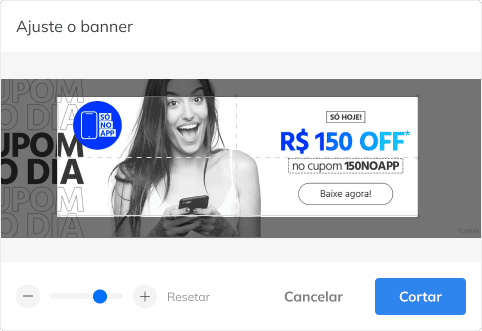
The editor with live preview addressed a different conversion problem: merchant-side paralysis. The biggest barrier to checkout customization wasn't capability — it was the fear of publishing something broken. Seeing the result in real time removed that friction. Adoption of at least one checkout customization per merchant went from 18% to 64% within 60 days of the editor launch.


Checkout
From 68% abandonment to 26%.
The checkout is the highest-leverage surface for a merchant's revenue. We designed both sides: the checkout that end-buyers see, and the editor merchants use to configure it.
Using a progressive disclosure strategy, capturing contact data first enabled remarketing on drop-off. Delivery second unlocked frete calculation. Payment last — by then, users were committed. Each step felt smaller.
POST-PURCHASE EXPERIENCE
Boleto post-purchase was a revenue recovery problem disguised as a confirmation screen. In Brazil, boleto is commonly shared and paid via WhatsApp, but most platforms treated the confirmation page as terminal. Boleto completion rate improved by +24% after feature launch
Payment declining came from a different angle — a card declined state that converted failure into an upsell. Instead of showing an error and stopping, the screen offered a 5% discount to complete the purchase with Pix. The rate dropped from 24% to 12% as the mix shifted toward Pix — a payment method with near-zero dispute rates.
24%
BOLETO COMPLETION AFTER ORDER
12%
drop-off rate after discount offer


Analytics
Merchants who understood their business, stayed.
Merchants who used the analytics module within their first week showed higher daily retention than those who didn't. The problem wasn't the data, it was access to it.
We rebuilt the reporting layer around three modules: finances, sales, and marketing, each surfacing its three most critical metrics immediately. Drill-down is available but not forced.
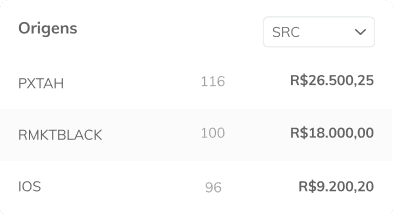
The marketing module included geographic data with an interactive map in 26 states, as Brazilian merchants already think in terms of regions and city rankings. Meeting that mental model reduced the learning curve to near zero.
4m12
Higher 90-day retention for merchants who used analytics in week one



How decisions actually got made
One designer. A very short line to everyone who mattered.
Being the only designer didn't mean working in isolation. Every major direction was shaped in close partnership with the CEO, Tech Lead, and CMO — weekly syncs that pushed back on scope, challenged assumptions, and forced prioritization calls I wouldn't have made alone.
The CEO kept the product honest against merchant needs. The Tech Lead defined what was feasible fast enough to matter. The CMO brought the brand lens that drove the white-label decision. My job was to translate those three perspectives into one coherent product.
The result wasn't one designer doing everything. It was one designer with a direct line to every decision that mattered.